Salt Flats & Secret Flavors: What I Ate in Uyuni’s Wild Heart
Ever wondered what it’s like to dine where the sky meets the earth? In Bolivia’s surreal Uyuni Salt Flats, meals aren’t just food—they’re part of the adventure. Isolated, high-altitude, and wildly beautiful, this remote region serves up unexpected flavors that surprise your palate as much as the landscape shocks your senses. From llama stew to salt-built kitchens, I’ll take you through the real taste of the Altiplano. Here, dining is not about luxury or presentation alone; it’s about warmth, resilience, and connection. In a place where temperatures drop below freezing at night and oxygen thins with every breath, food becomes a quiet act of survival—and celebration.
Arrival in Uyuni: First Bites of the Altiplano
Stepping off the bus into the crisp, thin air of Uyuni town feels like entering another world. The streets are dusty, lined with modest adobe buildings and brightly painted market stalls. A cool wind sweeps through the plaza, carrying the faint scent of woodsmoke and frying cheese. This high-altitude desert outpost, perched at over 3,700 meters above sea level, is the gateway to the Salar de Uyuni—one of the most breathtaking natural wonders on Earth. But before the salt flats reveal their magic, they begin with a welcome most travelers don’t expect: food that grounds you, warms you, and prepares you for what lies ahead.
The first meal many visitors share in Uyuni is simple but deeply nourishing: a steaming bowl of sopa de quinoa. This hearty soup combines Bolivia’s ancient grain with carrots, potatoes, and sometimes a shred of beef or llama, simmered slowly in a rich broth. Served with a side of fried cheese—golden, crispy on the outside, molten within—it’s a dish that speaks to the rhythm of life here. There are no frills, no elaborate plating—just warmth in a bowl, served in a small family-run comedor where laughter echoes across mismatched tables.
What makes this meal meaningful goes beyond taste. At this elevation, the body reacts differently. Digestion slows, appetite wanes, and even drinking water requires adjustment. The local diet, shaped by centuries of Andean tradition, responds to these challenges with wisdom. Quinoa, a complete protein rich in iron and fiber, helps stabilize energy. Potatoes—of which Bolivia is home to thousands of varieties—provide slow-releasing carbohydrates essential for endurance. Llama meat, lean and high in protein, is a staple protein source that thrives in this harsh climate. These ingredients are not chosen for trendiness; they are survival tools, refined by time and necessity.
Wandering through the town’s central market, you’ll find bundles of dried herbs, sacks of chuño (freeze-dried potatoes), and strings of llama jerky hanging like garlands. Vendors offer coca leaves in small woven bags, a traditional aid for combating altitude sickness. The market is a living pantry, a place where food and medicine are one. For travelers, this first encounter with Altiplano cuisine is often a revelation: food here isn’t just fuel—it’s a dialogue between people and place, a testament to adaptation and resilience.
The Train Graveyard Lunch: Rust, Wind, and Roadside Eats
Just outside Uyuni lies one of its most iconic landmarks: the Cementerio de Trenes, a haunting field of rusted locomotives abandoned since the early 20th century. Once part of a thriving mining railway, these skeletal engines now stand frozen in time, slowly being reclaimed by the desert. The wind howls through their hollow frames, and the sun casts long shadows across the cracked earth. It’s a place of silence and history—and, surprisingly, of sustenance.
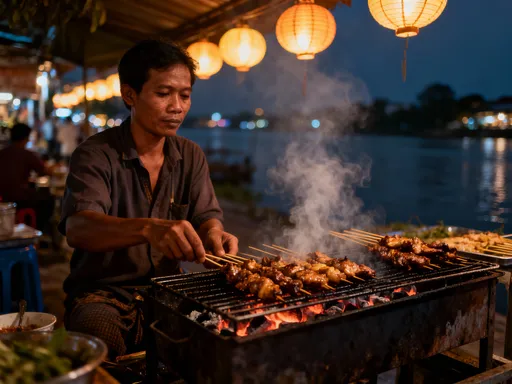
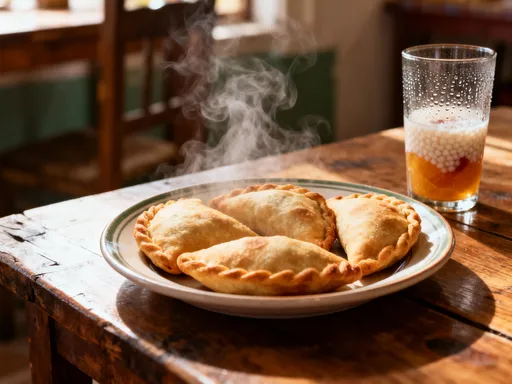
Scattered among the wreckage, small food stalls appear like mirages. Run by local women wrapped in colorful polleras and shawls, these roadside kitchens serve simple, portable meals designed for the conditions. The most popular offering? Empanadas de queso—flaky, golden pastries filled with melted cheese, baked in portable clay ovens fueled by dried dung. They emerge hot, their crusts crackling with heat, perfect for warming cold fingers and filling empty stomachs. Nearby, another vendor grills anticuchos—skewers of marinated beef heart—over open flames, the smoky aroma cutting through the metallic scent of rust.
Why these foods? Because they are built for the environment. In a place with no trees, no running water, and gusting winds that can knock you sideways, meals must be practical. Empanadas are self-contained, requiring no utensils. Anticuchos cook quickly over open fire, using cuts of meat that are both affordable and nutritious. These dishes are not just convenient—they are cultural solutions, born from generations of living in extreme conditions. They represent a culinary philosophy that values function as much as flavor, portability as much as taste.
As tourists snap photos among the trains, many pause to buy a snack, sit on a rusted rail, and eat in the open air. There’s something humbling about sharing a meal in this forgotten place, where the remnants of industrial ambition lie crumbling under the Andean sky. The food, simple as it is, becomes a bridge—not just between hunger and satisfaction, but between past and present, traveler and local, movement and stillness.
On the Salt Flat: Dining at 3,650 Meters
The journey onto the Salar de Uyuni begins with a sense of awe. As the road dissolves into a blinding white expanse, the horizon vanishes, and the sky seems to pour down onto the earth. This 10,000-square-kilometer salt desert is the largest of its kind, a geological marvel formed from prehistoric lakes. But for all its beauty, it is also unforgiving. Temperatures swing from scorching at midday to freezing at night. The air is thin, the sun intense, and the silence absolute. In such a place, food takes on new importance—not just as nourishment, but as protection.
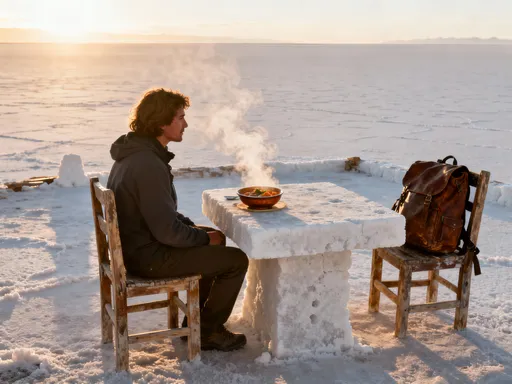
Most travelers experience the salt flats on multi-day 4x4 tours that traverse remote lagoons, geysers, and volcanic landscapes. Meals during these expeditions are prepared in basic shelters called refugios—simple structures with walls of salt blocks and corrugated metal roofs. Inside, the kitchens are minimal: a gas stove, a few pots, and shelves lined with dried goods. Water is scarce and must be transported in, so cooking methods are conservative. Every drop counts.
A typical lunch in the refugio might include rice with chuño, a fried egg, and a side of spicy ají sauce made from local peppers. The chuño, rehydrated and simmered until tender, has a unique texture—chewy, earthy, and deeply satisfying. It’s a survival food with ancient roots, developed by Andean peoples to preserve potatoes through long winters. Paired with rice and a touch of fat, it provides the sustained energy needed for hours of cold exposure and high-altitude hiking.
One of the most striking adaptations is the use of salt-block stoves. In some areas, cooks place metal griddles directly on slabs of compacted salt, using them as heat conductors. The salt doesn’t melt—it’s too dense—but it radiates warmth evenly, allowing for efficient cooking. Solar cookers, though less common, are occasionally used, harnessing the relentless Andean sun to prepare stews and soups. These methods reflect a deep understanding of available resources, a quiet ingenuity that turns the landscape itself into a kitchen.
Drinks are just as crucial. Coca tea, served continuously throughout the day, is more than a tradition—it’s a lifeline. Brewed from dried coca leaves, it helps ease nausea, improve circulation, and combat fatigue. While it contains only trace amounts of alkaloids and is entirely legal in Bolivia, its cultural significance is profound. To drink coca tea is to participate in a centuries-old practice of adaptation, a small act of respect for the land and its people.
The Hidden Refugio Kitchen: Where Salt Builds the Stove
Deep within the salt flats lies a refugio unlike any other—entirely constructed from blocks of salt. Its walls gleam faintly in the sunlight, its roof supported by beams of eucalyptus wood. Inside, the air is cool, the silence broken only by the soft clatter of pots. This is where meals for tour groups are prepared, not by chefs in white coats, but by local women who have spent their lives mastering the art of high-altitude cooking.
The kitchen is small, almost hidden in the back corner of the building. There’s no refrigerator—perishables are brought in weekly by supply trucks. Instead, food is preserved through drying, salting, and smoking. Strings of llama meat hang near the ceiling, slowly curing in the dry air. Sacks of quinoa and rice sit on wooden shelves. A single gas cylinder powers the stove, its flame carefully regulated to conserve fuel.
Watching a cook at work here is to witness a quiet mastery. She moves with efficiency, her hands shaping dough for humintas, stirring a pot of lawa, or slicing potatoes with a well-worn knife. Her techniques are passed down from mother to daughter: how to balance spices without measuring, how to judge doneness by touch and smell, how to stretch a small amount of meat into a meal that feeds ten. There’s no recipe book, no timer—just memory, instinct, and deep familiarity with the ingredients.
One afternoon, I observed the preparation of a traditional dish called pique a lo macho, a spicy beef and sausage platter served with fries and onions. While its origins are in the lowland city of Cochabamba, it has been adapted in Uyuni to suit the local palate—less oil, more heat, and often made with llama instead of beef. The cook explained that tourists sometimes ask for milder versions, but locals prefer it fiery. “It warms the blood,” she said with a smile. In a place where the wind bites through layers of clothing, a little fire on the plate makes all the difference.
Must-Try Dishes: A Flavor Guide from Local Tables
To understand Uyuni’s cuisine is to explore its most iconic dishes—each one a story of survival, celebration, and community. These are not restaurant inventions; they are everyday foods, served in homes, markets, and roadside stops. To taste them is to taste the rhythm of Altiplano life.
First is lawa, a thick, nourishing broth that varies by season and household. At its core, it combines grains like barley or quinoa with potatoes, carrots, and chunks of llama or beef, simmered for hours with onions, garlic, and a blend of dried herbs. The result is a deeply savory, comforting soup that fills the stomach and warms the soul. It’s often served at breakfast or after a long day of travel, a culinary anchor in a world of extremes.
Then there’s humintas—soft, steamed tamales made from fresh corn dough, wrapped in corn husks and cooked over low heat. They can be sweet, flavored with sugar and cinnamon, or savory, mixed with cheese or herbs. Unlike their Mexican counterparts, humintas are moist and delicate, with a natural sweetness that comes from the Andean corn. They are commonly sold at markets or given as gifts during festivals, a symbol of generosity and tradition.
Pique a lo macho, as mentioned earlier, is a dish of celebration. Though not native to Uyuni, it has found a home here, often served at the end of a tour or during local gatherings. The name translates to “manly spike,” a nod to its hearty, filling nature. Layers of beef, sausage, onions, and peppers are topped with french fries and a fried egg, all drenched in a spicy red sauce. It’s messy, bold, and deeply satisfying—a meal meant to be shared.
These dishes are not static. Tourism has brought changes—larger portions, cleaner plating, sometimes even fusion twists. But at their core, they remain true to their roots. A vendor in the market may now serve humintas on a paper plate with a fork, but the flavor is unchanged. A refugio cook may use a gas stove instead of wood, but the rhythm of preparation is the same. The food evolves, but it does not lose its soul.
Food as Survival: How Altitude and Isolation Shape Eating Habits
In Uyuni, every meal is shaped by two powerful forces: altitude and isolation. At over 3,600 meters, the air contains about 40% less oxygen than at sea level. This affects everything—breathing, sleeping, and yes, eating. Digestion slows, appetite fluctuates, and the body craves energy-dense foods. The local diet responds with precision.
Carbohydrates are king. Rice, potatoes, and quinoa dominate plates not for cultural preference alone, but for biological necessity. These foods provide glucose, the brain’s primary fuel, and help stabilize blood sugar in an environment where energy can plummet without warning. Fats, though used sparingly, are valued for their caloric density. A small piece of cheese, a spoon of oil, or a pat of butter can make a critical difference in maintaining body heat.
Hydration is equally vital. Despite the dry air, many visitors forget to drink enough water, leading to headaches and fatigue. Locals, however, are vigilant. They sip coca tea throughout the day, a mild herbal infusion that also helps with nausea and dizziness. Some chew coca leaves directly, a practice known as acullicu, which releases alkaloids slowly and helps regulate breathing. While controversial elsewhere, coca is deeply embedded in Andean culture as a medicinal and spiritual plant.
Sweet snacks are everywhere—dulce de leche in jars, mast’ka (a chewy, taffy-like candy), and dried fruits wrapped in paper. These are not indulgences; they are energy boosts. A small piece of candy can stave off hypoglycemia during a long hike or cold wait. Children sell them at bus stops, their hands cupped around a few precious pieces. To buy one is not just a transaction—it’s a gesture of connection, a shared understanding of what it means to endure.
Final Feast: A Night in a Salt-Crusted Lodge
The journey ends at a remote eco-lodge built entirely from salt blocks, its walls glowing faintly under a sky thick with stars. This is not luxury in the conventional sense—there is no room service, no jacuzzi, no Wi-Fi. But there is warmth. A wood-burning stove crackles in the common area, and the scent of cooking fills the air.
The final dinner is a celebration. A multi-course meal unfolds slowly, blending tradition with subtle modern touches. It begins with a salad of fresh Andean vegetables, followed by a creamy quinoa soup. The main course is roasted llama, tender and rich, served with a sauce made from native berries and spices. There are roasted potatoes—dozens of varieties, each with its own texture and flavor—and a side of spiced rice with raisins and nuts. Dessert is a simple flan, its caramelized top glistening under candlelight.
What makes this meal unforgettable is not the food alone, but the setting, the company, the silence between bites. Travelers from different countries sit together, sharing stories, passing dishes, smiling across the table. The cook, a local woman in her fifties, steps out to greet the group. She doesn’t speak English, but her smile says everything. This meal is her gift—a culmination of days spent traveling, surviving, and connecting.
As the night deepens, the conversation slows. The stars outside are impossibly bright, the salt walls holding the day’s warmth. In this vast, quiet desert, food has done its quiet work. It has warmed bodies, eased fatigue, and built bridges between strangers. It has reminded us that even in the most extreme places, humanity finds a way to gather, to share, to care.
The flavors of Uyuni don’t shout—they whisper through steam, smoke, and shared silence. In one of Earth’s most extreme landscapes, food becomes more than sustenance; it’s a quiet act of resistance against the cold, the altitude, the isolation. To eat here is to understand the rhythm of life on the edge. And sometimes, the simplest meal—boiled potatoes, a warm drink, a smile across the table—becomes unforgettable.