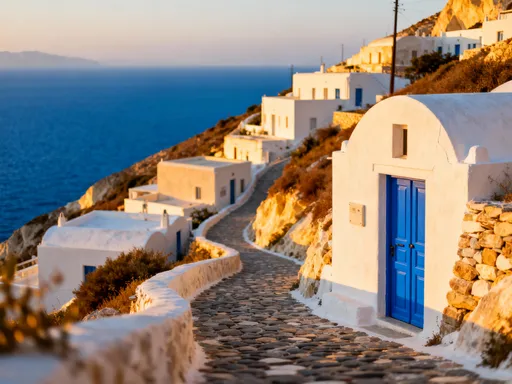
You Won’t Believe How These White Houses Glow in the Aegean Light
Walking through Milos, Greece, feels like stepping into a dream painted in white and blue. The island’s architecture isn’t just beautiful—it’s perfectly adapted to island life. Built into cliffs, cascading toward the sea, these homes use light, shape, and local materials in ways that surprise and inspire. I was stunned by how design and nature work together here. This is more than aesthetics—it’s wisdom shaped by sun, wind, and sea. Every curve, every window placement, every shaded courtyard tells a story of centuries-old understanding of climate, community, and harmony with the land. In an age of fast construction and generic design, Milos stands as a quiet testament to architecture that listens—to the earth, to tradition, and to the rhythm of daily life.
Discovering Milos: More Than Just a Typical Cycladic Island
Milos, one of the most geologically diverse islands in the Cyclades, remains refreshingly untouched by mass tourism despite its proximity to more famous neighbors like Santorini and Mykonos. Unlike those islands, where postcard-perfect views often come with crowded streets and sky-high prices, Milos offers an authentic glimpse into island life shaped by both nature and necessity. The island emerged from volcanic activity millions of years ago, resulting in dramatic rock formations, hidden coves, and a coastline carved by wind and waves. This unique terrain has deeply influenced where and how people build their homes. Settlements follow the natural contours of the land, winding up hillsides and tucking into sheltered bays rather than flattening landscapes for uniform development.
Plaka, the island’s capital, sits atop a hill overlooking the main port of Adamas. Reaching it involves a winding ascent, but the reward is immediate: narrow, cobblestone alleys open into panoramic views of the Aegean Sea, with clusters of whitewashed houses clinging to the slope like seashells on a tide line. There are no grand monuments or sprawling resorts—just homes built for living, not for show. The layout of Plaka reflects centuries of organic growth, where each new structure responded to sunlight, sea breeze, and privacy needs rather than rigid urban planning. Visitors often remark on the silence, broken only by the chime of church bells or the distant cry of a gull—a stark contrast to the bustling energy of more commercialized islands.
What sets Milos apart architecturally is its adaptability. While other Cycladic islands embraced uniformity in their iconic cube-shaped houses, Milos allowed variation. Homes here respond directly to microclimates and topography. On the windward side, buildings are lower and more compact; on sun-drenched slopes, they open toward southern exposures. Even the color palette varies subtly—some villages favor deeper blues on doors and shutters, while others use earthy ochres derived from local minerals. This diversity speaks to a deeper truth: architecture here evolved not from style manuals but from lived experience. Each decision—where to place a door, how thick to make a wall—was made in response to real, daily challenges of heat, wind, and isolation.
The Heart of Cycladic Design: Simplicity, Light, and Function
Cycladic architecture, renowned for its clean lines and harmonious proportions, reaches its purest expression in the villages of Milos. At first glance, the buildings appear strikingly simple: cube-like forms, flat roofs, smooth white walls, and small windows framed in blue. But this simplicity is not minimalism for the sake of fashion—it is the result of centuries of refinement in response to the Mediterranean climate. The region experiences long, hot summers with intense sunlight and limited rainfall, conditions that demand thoughtful design to ensure comfort without modern cooling systems. The thick walls of these homes, often constructed from volcanic stone or masonry, act as thermal mass, absorbing heat during the day and releasing it slowly at night, keeping interiors cool when outdoor temperatures soar.
Windows are deliberately small and strategically placed to minimize direct sun exposure while allowing cross-ventilation. Many homes are oriented to catch the meltemi, the cooling summer breeze that sweeps across the Aegean from the north. Interior spaces are designed to encourage airflow, with open doorways connecting rooms and courtyards that serve as outdoor living areas shaded by pergolas or vines. Flat roofs, another hallmark of the style, were traditionally used for drying herbs, fish, or laundry, and today often double as private terraces for evening relaxation under the stars. These functional elements have endured because they work—proven by time and necessity.
Modern renovations on Milos carefully preserve these core principles. While some homes now include air conditioning or solar water heaters, architects and homeowners alike prioritize maintaining the traditional aesthetic and performance. Insulation is added behind original walls, and energy-efficient glass is used in ways that don’t disrupt the visual rhythm of the streetscape. Courtyards remain central to daily life, serving as private sanctuaries for families and places to grow herbs, tomatoes, and fragrant jasmine. Even in newly built homes, designers replicate the inward focus of traditional houses—rooms arranged around a central courtyard rather than facing outward—which enhances privacy and creates a sense of calm within the home. This respect for heritage ensures that modern comfort doesn’t come at the cost of cultural identity.
Cave Houses and Rock-Carved Dwellings: Living with the Landscape
One of the most remarkable architectural features of Milos is its cave houses—dwellings carved directly into the island’s soft volcanic tuff. Found in villages like Klima, Firopotamos, and Tripiti, these homes are not relics of the past but living examples of sustainable, climate-responsive design. For generations, islanders used simple tools to hollow out shelters from the porous rock, creating cool, insulated spaces ideal for year-round living. The natural thermal properties of the stone keep interiors temperate—warm in winter and cool in summer—reducing the need for artificial heating or cooling. These homes were often expanded over time, with families adding rooms, courtyards, and storage areas as needed, resulting in organic, asymmetrical layouts that defy conventional architectural symmetry.
Walking through Klima today, one sees these cave houses perched above the sea, their colorful wooden doors and window frames contrasting beautifully with the grayish-white rock. Many have been restored with care, retaining their original curves and textures while incorporating modern amenities like electricity, running water, and kitchenettes. Some now operate as guesthouses, offering travelers a rare opportunity to sleep within the earth itself. The experience is profound—waking to the sound of waves lapping against the shore just steps away, sunlight filtering through a small arched window, the air fresh and still. These homes feel deeply rooted, as if they grew from the land rather than being imposed upon it.
The cultural significance of these dwellings extends beyond their practicality. They represent a philosophy of coexistence—of taking only what the land allows and shaping it with minimal disruption. Unlike modern construction, which often requires importing materials and leveling terrain, cave houses were built using what was already there. There was no need for concrete or steel; the mountain itself provided shelter. This deep respect for natural resources is increasingly relevant today, as the world seeks more sustainable ways to build and live. In preserving and repurposing these homes, Milos honors not just its past but also offers a model for future development that listens to the land rather than dominating it.
Klima’s Unique Syrmata: Functional Beauty by the Sea
Among the most iconic images of Milos are the syrmata—small, brightly colored boathouses that line the waterfront in fishing villages like Klima, Paliorema, and Mandrakia. These charming structures, built directly on the edge of the sea, were originally designed for practical purposes: to store fishing boats, nets, and equipment safely during the off-season. Their placement allowed fishermen to launch directly from their doors, minimizing effort and protecting gear from theft or weather damage. Each syrma (singular) is typically a single-story building with a large arched opening facing the water, painted in vibrant hues of blue, red, yellow, or green—colors that once helped families identify their own boathouse from a distance.
Today, the syrmata have become symbols of Milos’s maritime heritage and are among the most photographed sites on the island. Their reflections shimmer on calm harbor waters, creating a painterly effect that changes with the light—soft gold at sunrise, deep indigo at twilight. While some still serve their original function, many have been converted into boutique accommodations, cafes, or art studios, breathing new life into historic structures without compromising their character. Staying in a restored syrma offers an intimate connection to the sea; guests fall asleep to the gentle rocking of boats and wake to the scent of salt and seaweed.
What makes the syrmata so enduring is their perfect balance of utility and beauty. They were never intended to be decorative, yet their clustered arrangement, varied colors, and seaside setting create a visual harmony that feels both spontaneous and intentional. Unlike modern waterfront developments that often prioritize views over function, the syrmata were built for work first, with aesthetics emerging naturally from necessity. This authenticity resonates deeply with visitors seeking genuine cultural experiences. The preservation of these structures also highlights a broader value on Milos: that beauty does not require grandeur, and significance does not depend on size. A small boathouse, once used for mending nets, can become a vessel of memory, identity, and inspiration.
Materials and Craftsmanship: What Holds These Houses Together
The durability and elegance of Milos’s architecture owe much to the thoughtful selection of local materials and time-honored craftsmanship. Volcanic stone, abundant across the island, forms the foundation of most traditional buildings. Quarried from nearby hills, this dense, durable rock provides excellent insulation and structural strength. Lime plaster, made from burned seashells and water, is applied in thick layers to seal walls and create the signature smooth, luminous finish. This plaster not only protects against moisture but also reflects sunlight, reducing heat absorption—a crucial feature in the relentless summer sun. The final step is whitewashing, typically done annually, using a mixture of lime and water that hardens into a protective crust over time.
Wood, though less common due to its scarcity on the island, is used selectively for doors, shutters, and roof beams. Traditionally, timber came from nearby islands like Euboea or was salvaged from shipwrecks—a reminder of the resourcefulness required in isolated communities. Metal elements are kept to a minimum, as salt air causes rapid corrosion. When used, iron fixtures are often coated or designed for easy replacement. These material choices reflect a deep understanding of environmental conditions and a commitment to longevity over convenience.
Equally important is the craftsmanship passed down through generations. The precision of stone masonry, the symmetry of arched doorways, the intricate ironwork on window grilles—these details are not mass-produced but handcrafted by local artisans. Courtyards are paved with irregular stone slabs arranged in patterns that allow drainage while adding texture underfoot. Shutters are built to fold neatly against walls, maximizing airflow while providing shade. Even the placement of a single hook on a wall—used for hanging lanterns or drying clothes—is considered in relation to sun angles and wind patterns. These subtle touches, often unnoticed by casual observers, are what give Milos’s architecture its soul. They speak of care, intention, and a quiet pride in doing things well.
Modern Meets Traditional: How New Builds Respect Old Styles
As demand for housing and tourism accommodations grows, Milos faces the challenge of balancing development with preservation. Fortunately, strict architectural guidelines ensure that new construction respects the island’s visual and cultural identity. Local regulations mandate that new homes adhere to Cycladic principles: white walls, flat roofs, minimal height, and low visual impact. These rules are not arbitrary—they are designed to protect the island’s character and prevent the kind of overdevelopment seen on other Greek islands. As a result, even contemporary villas blend seamlessly into the landscape, appearing as if they’ve always belonged.
Modern architects on Milos take these guidelines seriously, viewing them not as limitations but as creative opportunities. Many new homes incorporate sustainable technologies—such as solar panels, rainwater harvesting systems, and geothermal heating—while concealing them from view. Solar arrays might be installed on rear roofs or integrated into pergolas, ensuring they don’t disrupt the clean lines of the façade. Large glass doors open onto terraces without compromising privacy, thanks to strategic placement behind walls or within courtyards. Insulation and energy-efficient windows improve comfort without altering the exterior appearance.
Luxury developments, while more spacious, still follow the inward-focused model of traditional homes. Instead of sprawling outward, they build around central courtyards filled with olive trees, citrus plants, or small fountains—private oases that echo ancient design philosophies. These spaces provide shade, reduce noise, and create microclimates that enhance livability. Interior layouts prioritize flow and natural light, with open-plan living areas that connect seamlessly to outdoor spaces. The result is a harmonious fusion of past and present—homes that feel timeless because they honor the principles that made Cycladic architecture successful in the first place.
Why This Architecture Matters: Sustainability, Identity, and Place
The architecture of Milos is more than a collection of beautiful buildings—it is a living record of human ingenuity, environmental adaptation, and cultural continuity. In a world increasingly shaped by globalized design and disposable construction, the island stands as a quiet rebuttal to the idea that progress means erasing the past. Its homes are not museum pieces but functional, evolving spaces that continue to serve families, artisans, and visitors. They demonstrate that sustainability is not a new concept but one deeply embedded in traditional knowledge. Long before the term “eco-friendly” entered the lexicon, islanders were building with local materials, maximizing natural light and ventilation, and designing for resilience.
Beyond environmental wisdom, this architecture carries identity. It tells the story of a people shaped by the sea, the sun, and the volcanic earth. It reflects values of modesty, community, and respect for nature—values that resonate deeply with those seeking meaning in their surroundings. When travelers fall in love with the white houses of Milos, they are not just responding to aesthetics; they are sensing something deeper—a way of life that prioritizes harmony over excess, simplicity over spectacle.
Preserving this architectural heritage is essential, not only for tourism but for the soul of the island. Unchecked development could erode the very qualities that make Milos special—the quiet coves, the hand-painted doors, the sense of timelessness. By honoring traditional design, the island protects its uniqueness in a world of homogenized destinations. Future growth must continue to listen to the land, learn from the past, and build with intention. The glowing white houses of Milos are not just beautiful—they are wise. And in their quiet presence, they offer lessons for how we might all live more thoughtfully, more gently, on this fragile planet.